

How to Use AI to Make Games Without Getting a Headache
I was chatting with a friend at a mamak stall last week. He’s a huge gamer, the kind who spends hours on Steam but always sighs and says, “Bro, I have this killer idea for a game, but I cannot code to save my life.”
Honestly, we’ve all been there. You have a vision of a cool character or a specific gameplay mechanic, but then you look at a screen full of C++ or C# and you feel like closing your laptop and going to sleep. But lately, things have changed. You might have seen news about people “coding” entire apps just by talking to a computer. It’s no longer sci-fi. Today, you can actually use AI to make games even if your best technical skill is using a TV remote.
It’s not about the AI doing everything while you sit back and drink teh ais. It’s more like having a very hardworking intern who never sleeps. You give the directions, and the AI handles the “heavy lifting” that used to take months.
Can you really use AI to make games if you don’t know coding?
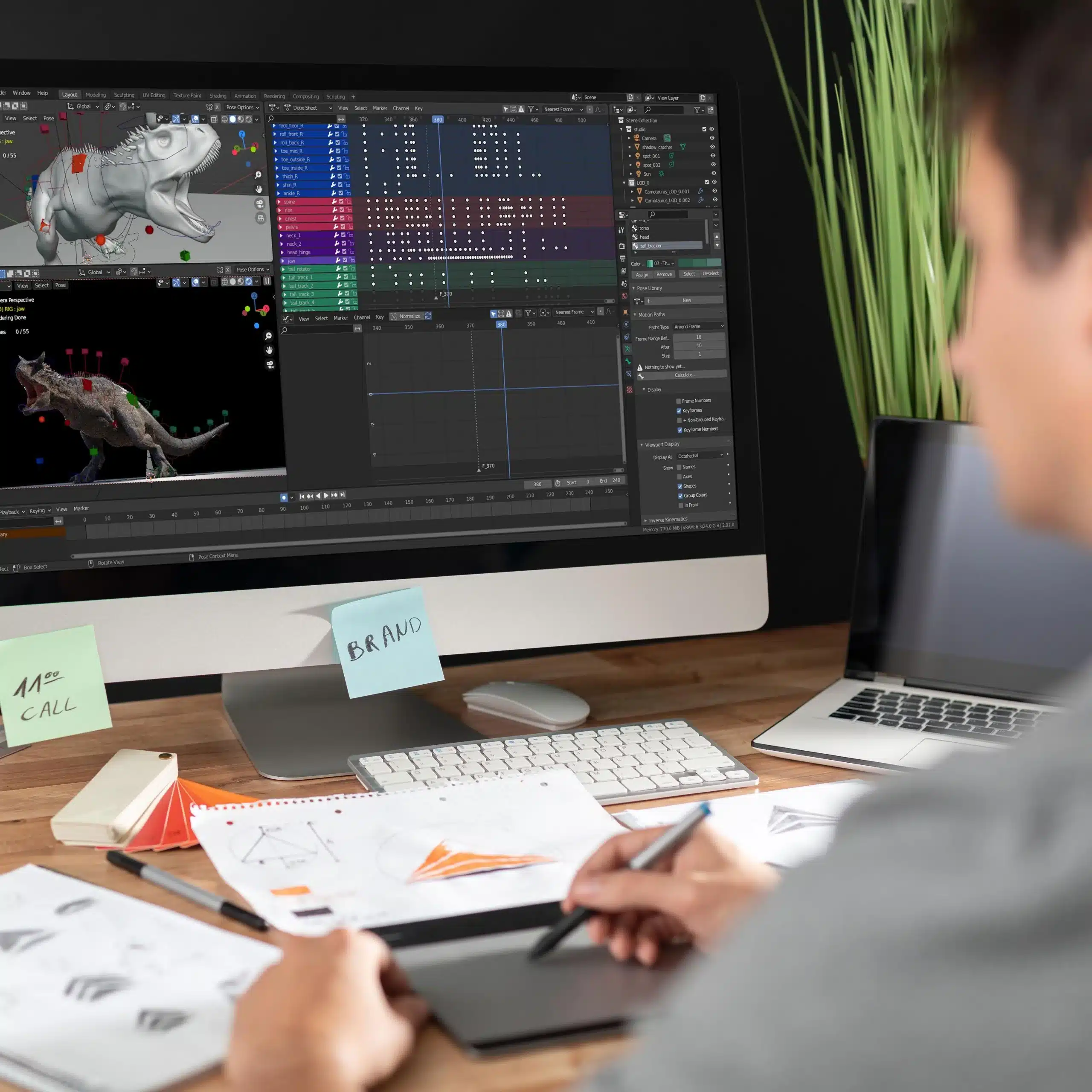
A few years ago, “no coding” meant using a drag-and-drop builder where you were limited to whatever the software allowed. If you wanted something unique, you were out of luck. But now, AI game development for beginners has reached a point where you can literally describe what you want.
Think of it like ordering food. Instead of having to be the chef, know the exact temperature of the oil, and how many grams of salt to add, you just say, “I want a Nasi Lemak, extra spicy, fried chicken should be crunchy.” The AI (the chef) understands the “context” and produces it. In game dev, you might tell an AI, “Write a script for a player character that jumps higher when they pick up a coffee icon.” Boom, the code is there.
This is what we call no coding game development AI. It bridges the gap between your imagination and the actual technical execution. It’s why so many small creators are suddenly popping up on platforms like Itch.io with weird, wonderful games they made in a weekend.
How do I get the “look” right without being an artist?
The biggest hurdle for most of us isn’t just the code—it’s the art. You want a cool cyberpunk street or a cute forest, but you can’t even draw a straight line. This is where AI game asset generation becomes your best friend.
You’ve probably seen AI images on social media. Now, apply that to games. You can generate:
- Textures: Tell the AI you need a “mossy stone wall for a 2D platformer” and it gives you a seamless tile.
- Characters: Need a grumpy shopkeeper in a pixel art style? Describe him, and the AI generates the sprite.
- Backgrounds: Instead of painting for 20 hours, you use AI game creation tools to generate a stunning 2D environment in seconds.
Even AI animation generation is starting to pick up. Instead of drawing every frame of a walking cycle (which is honestly soul-crushing work), some tools can take a static image and predict how it should move. It’s not perfect yet, but it’s 10 times faster than doing it manually. For the average “indie” person, this is a life-saver.
Is there a way to use AI to make games level by level?
Designing a level is like designing a house. You need to know where the doors are, where the “fun” is, and make sure the player doesn’t get stuck in a wall. This is a very specific skill called “Level Design.”
If you use AI level design tools, you can actually generate the layout of a dungeon or a racing track based on parameters. You say, “I want a maze that takes 5 minutes to solve with three enemy encounters,” and the AI can rough it out for you.
Then there’s the logic part. Even if you use a “no-code” engine, you still need logic. AI game scripting tools allow you to ask questions like, “How do I make the enemy follow the player only when it’s dark?” The AI doesn’t just give you a block of text; it explains how to plug it into your game engine. This AI-assisted game design workflow is basically the “modern way” to work. You are the Creative Director, and the AI is your entire production team.
What are the actual steps for a total newbie?

If you’re sitting there thinking, “Okay, this sounds cool, but where do I start?”—don’t worry. Here is a simple how to make a game with AI step by step guide for the Malaysian context:
- The Idea: Don’t try to make the next Genshin Impact. Start small. Maybe a simple “Run away from the Abang Delivery” game.
- The Brain: Use something like ChatGPT or Claude to help you brainstorm. Ask it, “What are some fun mechanics for a game set in a night market?”
- The Engine: Pick a beginner-friendly engine. Even though The9bit usually handles more complex backend and administrative tech support, they’d tell you to start with something visual like GDevelop or Construct 3 if you’re a hobbyist.
- The Assets: Use AI game creation tools like Midjourney or Leonardo.ai for your 2D art. For sound, there are AI tools that generate “8-bit jumping sounds” or “ambient rain music” on demand.
- The Logic: Use AI game scripting tools to write the small bits of code you need. Copy, paste, test, and fix.
The most important thing is to just start. Don’t wait until you “learn” everything, because in the AI world, the tools change every month anyway.
Why isn’t everyone making games if it’s this easy?
Good question. While it’s “easier,” it still requires “Taste.” AI can give you a thousand characters, but it doesn’t know which one looks “cool” or fits your story. That’s the human part.
Also, some people worry that using AI is “cheating.” But look at it this way: when photographers stopped using darkrooms and started using Photoshop, was that cheating? When musicians started using synthesizers instead of a full orchestra, was that cheating? No, it’s just a new tool.
For indie developers, AI is a “force multiplier.” It allows a one-person team in a bedroom in PJ or Subang to create something that looks like it was made by a studio of ten people. If you want to build games using AI, the barrier to entry has never been lower. You just need to be willing to play around with the prompts and see what sticks.
At the end of the day, making a game is about telling a story or sharing an experience. Whether you wrote every line of code yourself or used a dozen AI game development tools to help you, the player only cares about one thing: “Is this game fun?”
If you have an idea, don’t let it just sit in your head. The tech is there. Go try it out.
Official Website: https://the9bit.com/