
Making Games Is Changing A Deep Dive Into What Is AI Game Development
If you’ve played any recent open-world game and noticed that the background characters don’t just walk into walls anymore, or the scenery looks impossibly detailed for a human to have hand-drawn every rock—you’ve already seen the “magic” at work. But for those of us sitting at the Mamak talking about the “next big thing,” the term “AI” gets thrown around a lot. People keep asking, what is AI game development exactly? Is it just robots making games?
Actually, it’s more like giving a master carpenter a set of power tools that can think. It’s not about replacing the person with the vision; it’s about removing the “boring” parts so the cool stuff happens faster.
Wait, so what is AI game development actually?
Back in the day, when we talked about artificial intelligence in gaming, we usually meant the enemies. You know, like in Pac-Man where the ghosts follow you, or in Counter-Strike where the bots sometimes act “sus” and hide in a corner. That was basically just a list of “If X happens, do Y” instructions. It wasn’t really “learning.”
Today, the answer to what is AI game development is much broader. It’s the use of machine learning and smart algorithms during the actual building process. Instead of a developer manually coding the trajectory of every leaf falling from a tree, they train a system to understand physics and let it handle the rest.
Think of it like this: in the old days, you had to cook every single plate of fried rice yourself. Now, you have a smart kitchen that prep-cuts the onions and maintains the wok temperature, so you can focus on the secret sauce. That’s AI in game development. It’s a collaborator. Platforms like The9bit often see how this tech helps smaller teams punch above their weight, acting as the backbone that lets creators focus on the “fun” part rather than the “grindy” part.
Is AI for game design making things too “easy”?
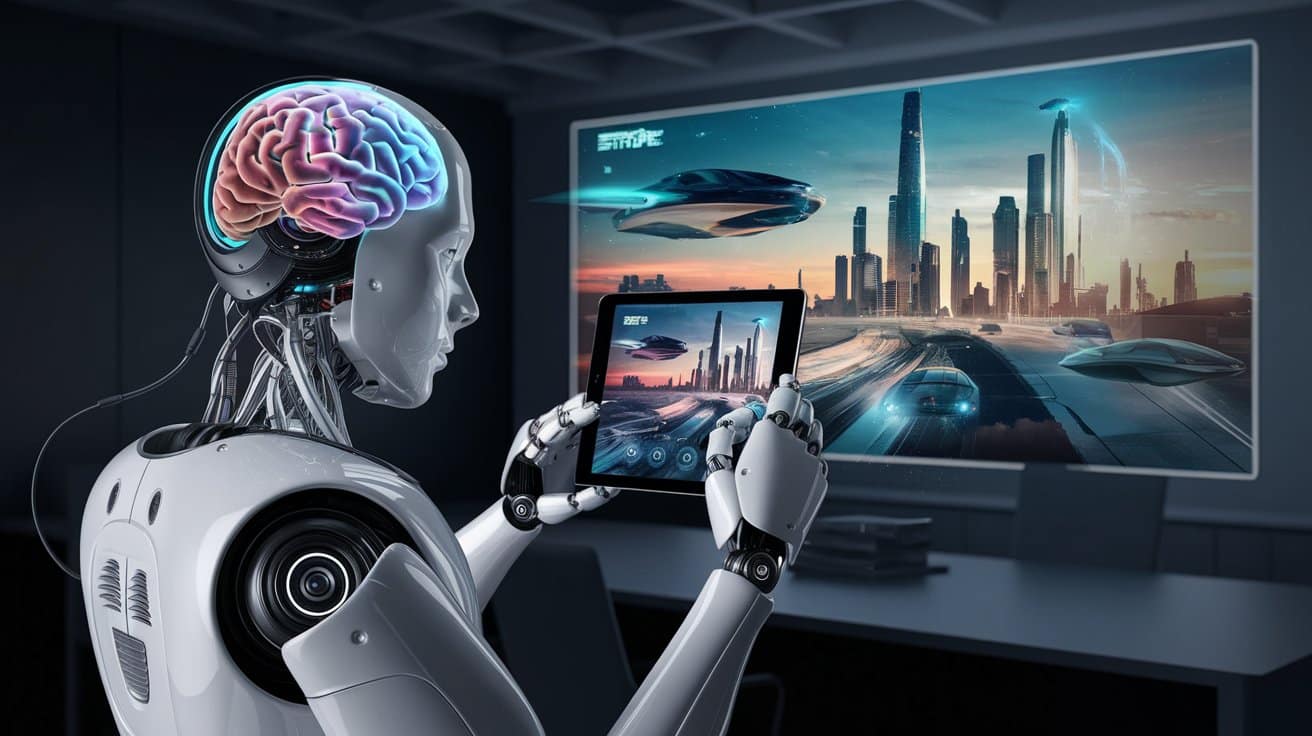
A lot of people worry that AI for game design will make games feel generic. “If a computer makes it, won’t it look like everything else?” Actually, it’s usually the opposite.
One of the big benefits of AI in game development is something called Procedural Content Generation (PCG), but “on steroids.” Imagine a game like No Man’s Sky or Minecraft. The computer generates the terrain. Now, with AI-generated game content, we can go further. We can have systems that create realistic textures—like how moss grows on a damp wall—without an artist having to spend 40 hours painting it.
This doesn’t mean the artist is out of a job. It means the artist now becomes a “Director.” They set the rules, and the AI follows them. If you want a cyberpunk city that feels lived-in, the AI can help populate the “noise”—the trash on the streets, the flickering neon signs, the random graffiti—while the human designer focuses on the main story locations.
What is AI game development doing for the “boring” stuff?
If you ask any game dev what they hate most, many will say “QA testing.” Imagine having to jump against every single wall in a massive game to make sure you don’t fall through the floor. It’s soul-crushing work.
This is where AI game testing automation comes in. Instead of 50 humans doing the same jump for 10 hours, you can deploy “AI agents.” These bots are programmed to “play” the game at 10x speed, trying every possible combination of buttons to see what breaks. They don’t get tired, and they don’t need coffee breaks.
By the time the game reaches you, it’s much more polished. This is a massive part of how AI is used in game development today. It’s the invisible shield that prevents those day-one bugs that we all love to complain about on Reddit.
Can we finally talk to NPCs like they are real people?
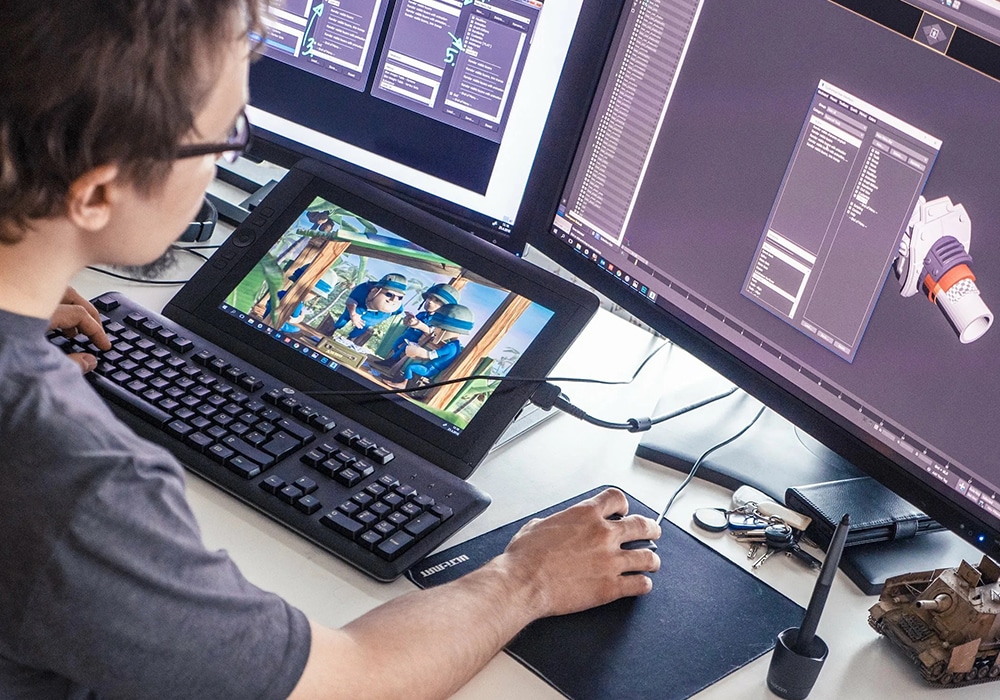
This is the “Holy Grail” of AI storytelling in games. We’ve all been there: you talk to a villager in an RPG, and they say the same “I used to be an adventurer like you” line fifty times. It breaks the immersion.
With AI storytelling in games, we are moving towards dynamic dialogue. Imagine talking into your headset, and the NPC responds based on your tone of voice or what you’re wearing in the game. Using Large Language Models (LLMs), developers can give characters a “personality” and a “memory” instead of just a script.
It’s still a bit experimental because, let’s be real, sometimes AI says weird things. But the potential for a game that “remembers” you were mean to a shopkeeper three cities ago—not because a dev coded that specific event, but because the AI understands the shopkeeper is angry—is insane.
Getting started with AI game design basics
If you’re someone looking at this from the outside and thinking, “Can I do this too?”—the answer is a big YES. You don’t need a PhD in Mathematics.
The AI game design basics start with understanding the tools already in the market. Many modern game engines (like Unity or Unreal) have AI plugins built-in. Whether it’s for pathfinding (how characters move) or AI-generated game content (making trees and mountains), the barrier to entry is lower than ever.
Even the administrative side of things is getting a boost. Services like The9bit help bridge the gap for teams who need the technical support to integrate these new workflows without getting lost in the jargon.
At the end of the day, how AI is used in game development is about one thing: making better games, faster. It’s not about replacing the human touch; it’s about giving humans a bigger canvas to paint on. We are moving away from the era of “Technical Limitations” and into the era of “Limitless Imagination.”
Official Website: https://the9bit.com/